At the beginning of his great epic poem The Divine Comedy, Dante confesses that he had “lost the straight way” and found himself wandering in a dark wood midway through life’s journey. The experience of seeing the road we firmly believed was stretching straight toward our destination suddenly vanish, leaving us trapped in a dark forest with every direction blocked, is not merely the portion of an ancient poet. Our own lives, too, often bring us face to face with doors that are firmly shut for reasons we cannot possibly explain, precisely at the moment when carefully laid plans and burning passion have reached their height. The greater the expectation, the deeper the valley of disappointment; the deeper the devotion, the more bitter the bewilderment of being brought to a halt.
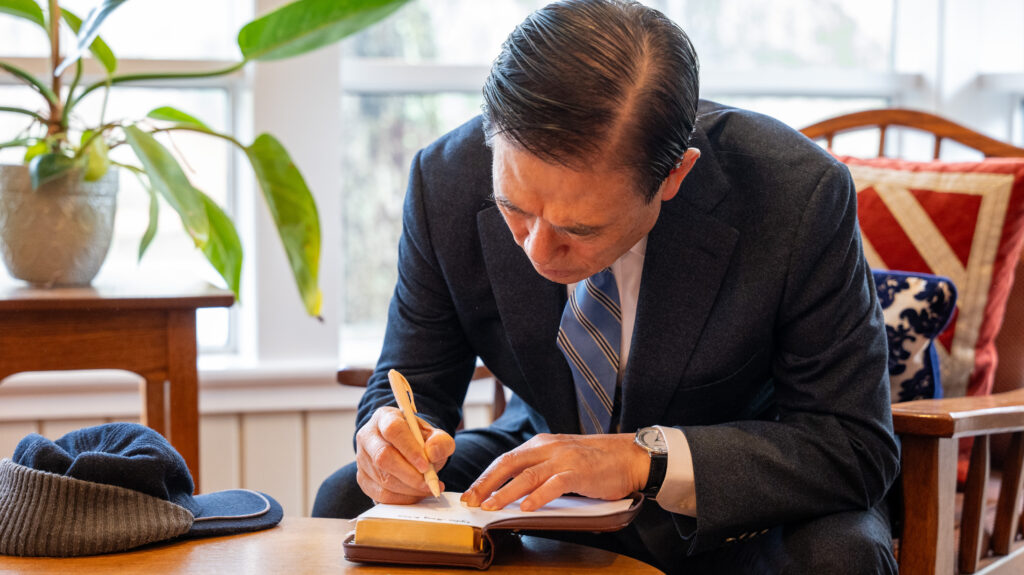
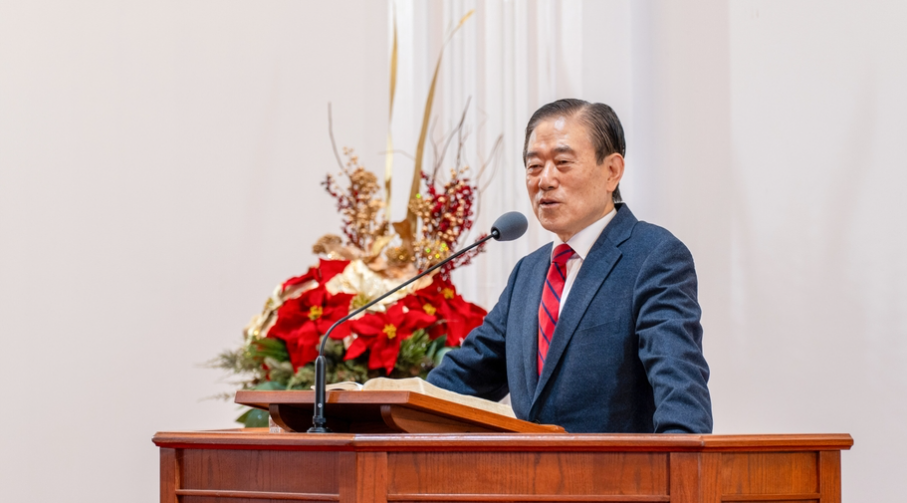
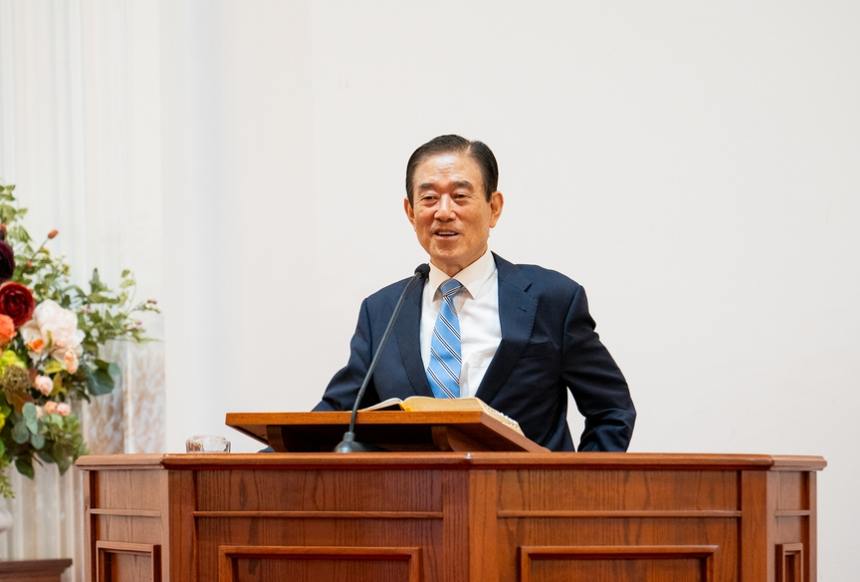
In such a place of profound loss and confusion, Pastor David Jang’s sermon on Acts 16 illuminates with striking clarity that a closed door is never a sign of abandonment. Rather, it is a spiritual signal that a greater and deeper providence of God is beginning. His profound theological insight gently bends the inefficient straight path we stubbornly insisted upon and guides us onto God’s most perfect and secure path of grace.
The Call of the Gospel Encountered in the Darkness of Losing the Way
In Paul’s heart burned a fervent and grand vision: to plant the banner of the cross in Rome, the very heart of the vast empire. In order to reach that place where all the roads of the world converged, first establishing a firm foundation for ministry in Asia must have seemed to him the most reasonable and wise missionary strategy imaginable. Yet the Holy Spirit repeatedly blocked his way in a mysterious and incomprehensible manner.
What appeared, by human calculation, to be repeated interruptions marked by obvious waste and failure is interpreted in this sermon not as a cold rejection, but as a holy invitation into an entirely new direction. When human zeal and determination are burning at their hottest, God’s unexpected restraint becomes a quiet yet solemn testing ground that asks where our faith has truly cast its anchor. To our urgent and resentful protest, “Why are You blocking this path now of all times?” the Holy Spirit answers, “Precisely because it is now, you must stop.”
In the dark night at Troas, when every plan seemed to have come to nothing and every passage appeared to be cut off, Paul finally saw the vision of a man of Macedonia. The desperate cry, “Come over and help us,” does not remain merely a geographical summons from the first century. The flow of the Word gives us insight that this call is like the spiritual emptiness of modern people, thoroughly hidden beneath dazzling material abundance, and like the sorrowful groaning of our age—an age that appears busily connected yet wanders without truly touching any soul deeply. The lament rising from that very gap is the spiritual Macedonia we face today.
Therefore, when we stand motionless before a closed door, our prayer must move beyond the noisy cry that insists on forcing through our own will. When the texture of prayer deepens beyond the protest, “Why are You blocking me?” into the obedient whisper, “Lord, where shall I go now?” only then does the darkness of Troas become a light of grace that points toward a new direction.
Within this difficult journey, the scene in which Paul circumcises Timothy teaches us with remarkable clarity what the essence of the gospel truly is. Paul’s decision to lay down even the strict principles he had established for the sake of truth, along with his personal pride, in order to draw one step closer to a lost soul was not a simple or shallow missionary strategy. It was the “heart of Christ” beating passionately for those who were dying, the warm body temperature that only the gospel can possess.
The true standard that determines the success or failure of mission and ministry is not found in outwardly impressive statistics or organizational efficiency. The spiritual key that determines whether a path opens or closes is the transparent heart that willingly empties and lowers its own rights for the sake of souls, the sacrificial devotion of the cross that seeks not to display the self under a vain pretext, but to reveal Jesus Christ alone.
Grace and Obedience Blooming by the River of Prayer
Philippi, the first gateway into Europe, where Paul arrived as though the sea itself had parted in response to obedience to the vision, was surprisingly a barren and unfamiliar land where not even a Jewish synagogue could be found. When people are placed in a new environment and set foot in unfamiliar territory, they instinctively tend to become absorbed in forming new strategies and grand plans. Yet in that thoroughly unfamiliar place, the first place Paul sought was none other than a quiet place of prayer.
At a secluded spot by an unnamed riverside, where Lydia stayed—a woman who feared God and thirsted for the truth—the great work that would change the flow of world history began to stir. The clear testimony of Acts, “The Lord opened her heart to respond to Paul’s message,” is the essence of biblical meditation, eloquently declaring that the absolute sovereignty of salvation belongs to God alone.
Our mission extends as far as sowing the seed of life with tears and faithfully proclaiming the word of the truth of the cross. The clear truth that it is the Lord alone who opens the firmly locked bolt of the soul and causes life to be conceived within it leads modern ministers, heavily weighed down by the pressure of visible results and efficiency, into a place of true freedom. When we believe that the heavy responsibility of persuading souls rests solely on our shoulders, we easily become exhausted. But the firm faith that the sovereignty of salvation belongs entirely to God leads us into ministry marked by joy and perseverance that do not grow weary.
For this reason, every first step in mission and life must begin from the place of prayer. Prayer is not a useful auxiliary tool that assists my plans. It is a spiritual communication network that fully connects my soul to the precise command of the Holy Spirit. When this network is fully connected, astonishing paths of life, which could never be measured by the shallow wisdom of human beings, finally begin to open.
When the Lord gently opened Lydia’s heart, her house, which had been firmly closed, was opened wide. At last, the Philippian house church—the radiant first fruit of European mission—was established. A small and ordinary house was transformed into a spiritual outpost for evangelizing a vast empire, and the sincere devotion of one businesswoman began to shake the hardened spiritual landscape of an entire city.
Through the place illuminated by this passage, we come to understand that the church is never merely a grand building rising high into the sky or a cold and rigid institution. The true church is a warm network of relationships among people who deeply share the heart of Christ and fully embrace one another’s fragile lives. When the cross is raised high upon this foundation of genuine relational trust, the dynamic vitality of grace finally begins to moisten a dry and hardened city.
A generous love that breaks down the thick boundaries of generation, status, and culture, and willingly invites others to the table of one’s own life—this is the true strength of the church that overcomes the world abundantly.
Faith That Shakes a Closed Prison, and the Dawn of Hope
The majestic spiritual map drawn in Acts 16 reveals, without concealment, the height of the paradox of faith as closed doors and open doors fiercely intersect. Because Paul and Silas had compassion on a pitiful slave girl possessed by a spirit of divination and healed her, they were instead severely beaten and imprisoned in a deep jail where even light could not enter. At the bottom of despair, where every side was blocked by massive walls, and at midnight when the pain of torn flesh had reached its peak, astonishingly, songs of praise rang out from their lips instead of complaint.
The earthly doors that confined their bodies had been cruelly shut, but the heavenly doors toward their souls had been opened wide. The praise they offered while bleeding finally caused a miraculous earthquake that shook the solid foundations of the prison from the very bottom. The jailer, who had drawn his sword and was about to take his own life in fear, was transformed into a child of light who knelt in repentance and asked, “What must I do to be saved?”
“Believe in the Lord Jesus, and you will be saved—you and your household.” This majestic and gracious proclamation teaches us that the power of the gospel is a great promise that embraces not merely the inner transformation of one individual, but the complete restoration of the entire household to which that person belongs. The unstoppable expansiveness of the grace of the cross is this: the story does not end in one person’s piercing pain and dark despair, but calls forth a radiant dawn of hope upon an entire family.
The deepest night of our lives—the time when we feel most afflicted, lonely, and beyond the help of anyone—is precisely the blessed hour when God, with the invisible hand of grace, is most firmly building our spiritual house. The astonishing paradox that the cold floor of a closed prison cell touches the most radiant dawn light of God deeply rebukes our shallow vision and fragile faith, which so easily become discouraged and despair before even the smallest barriers of reality.
The Spiritual Path We Ask About Before the Closed Doors of Life
Let us carefully bring this vast and mysterious trajectory of the Word into the weary and busy places of our daily lives today. Unlike us, who struggle in every direction trying to make a way for ourselves, God always stands silently upon that road and gives His full attention to shaping the person who will walk it. From comfortable and familiar Asia to barren Europe, from the controllable territory of familiarity to an unknown land where one cannot see even one step ahead, from my carefully planned design to the territory of unconditional obedience—God continually moves us without ceasing.
Therefore, the closed door that blocks the course of my life is never a sign of condemnation toward me or of God’s intention to abandon me. It is the Holy Spirit’s most precise and tender compass, realigning the misplaced coordinates of my soul with the majestic heartbeat of God. The place to which the needle of that compass points after its rough trembling comes to rest is the Macedonia of life that is urgently calling me today.
Ultimately, the essence of faith that we must desperately recover in this age is not religious impatience that tries to accomplish something impressive. It is the work of guarding, to the end with tears and love, the holy scene in which the heart of just one person beside me is opened. If the Holy Spirit firmly brings my life to a halt at the very moment when my perfect plan shatters into pieces, this is not God’s rejection of me. It is His holy and tender touch, refining me into a deeper instrument of grace.
Rather than wasting the energy we have left trying to forcefully knock down and break open closed doors, we must quietly kneel before those doors and listen fully to the voice of the Lord, asking why He has closed them. In the very place where we give up and collapse, God causes us to meet the person He has long prepared.
The bewildering place where your carefully designed plan has helplessly come to a halt is never the tragic final destination of your life. Are you, at this very moment, standing before a massive door that you cannot possibly open by your own strength, trembling in deep helplessness? Just as the long-sleeping history of the world stirred and awakened when Paul took the step of obedience, in that dark place you cross through kneeling prayer, a radiant dawn is already quietly waiting—a dawn prepared abundantly to awaken one soul and one city.
Tonight, when all the noise of the world has faded, when you lay aside the futile sound of resentment and quietly ask, “Lord, before this blocked path, where shall I go now?” what radiant door of tomorrow will your deep prayer open wide?